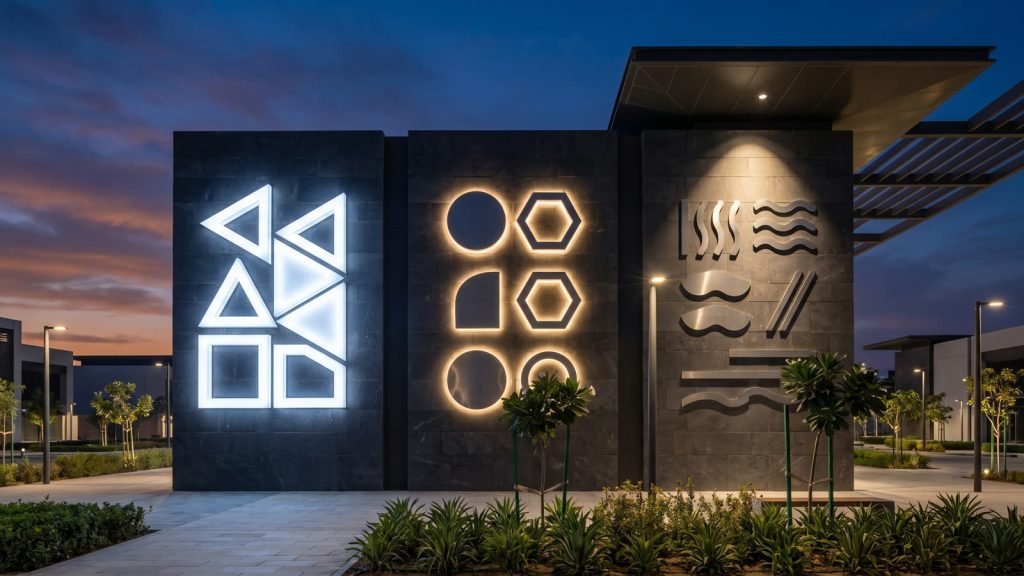
LED screens or printed advertising: which suits your business?
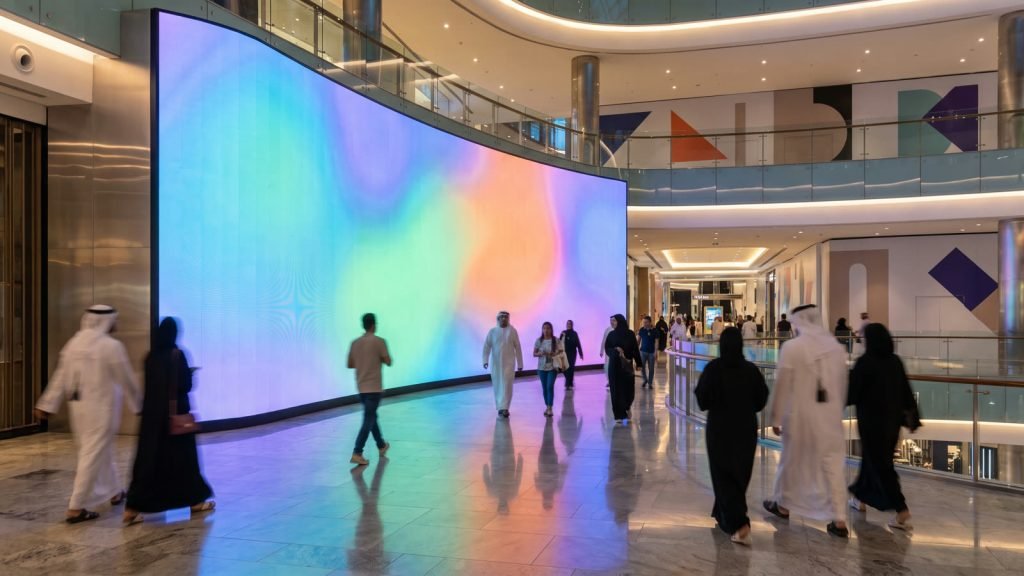
Walk through any mall in Abu Dhabi and the change is obvious: more and more of the advertising moves. LED screens and video walls have become affordable enough for individual shops, showrooms and offices, not just major brands. That does not make printed signage obsolete. The two do different jobs, and the right choice depends on how often your message changes.
Where printed signage still wins
A printed banner, poster or backlit light box costs a fraction of a screen, needs no power beyond lighting, and has nothing that can break or need updating. For a message that stays the same for months, such as a brand name, a permanent offer or a store directory, print is hard to beat on cost.
The limit is change. Every new campaign means a new print and an installation, and outdoor prints slowly fade in strong sun.
Where LED screens win
- Change the message any time. A new offer is a file update, not a reprint.
- Schedule by time of day. Breakfast in the morning, dinner in the evening, a weekend promotion on Friday.
- Motion gets noticed. Movement draws the eye in a way a static print cannot.
- Several messages in one space. A single screen can rotate products, brands or partner adverts.
The trade-offs are a higher upfront cost, electricity, occasional maintenance, and the need for someone to create and update content. A screen showing the same tired loop for a year is money spent on a very expensive poster.
Pixel pitch, explained simply
Pixel pitch is the distance between the centres of neighbouring LEDs, measured in millimetres. The smaller the number, the sharper the image up close, and the higher the price. A useful rule of thumb is that the comfortable viewing distance in metres is roughly the pixel pitch in millimetres. A P3 screen looks sharp from about 3 metres; a P6 screen is better suited to being viewed from 6 metres or more.
This is why a screen above a shop entrance, read from across a mall, can use a larger pitch than one beside a reception desk that people stand right next to.
Indoor and outdoor are different products
An outdoor screen has to compete with direct sunlight, so it needs far higher brightness than an indoor screen, as well as sealing against dust, heat and water. Putting an indoor screen in a sunny window is a common mistake; it simply looks washed out in the daytime.
External screens facing a road or public space also generally need approval before they are installed, so check this early.
A simple way to decide
- Message changes rarely, budget is tight: printed signage or a light box.
- Message changes monthly or more often: an LED screen pays back in avoided reprints.
- Several products or partners to promote in one spot: LED screen.
- No one available to update content: print, or arrange content management before buying a screen.
Many businesses end up with both: a permanent printed or fabricated sign for the name, and a screen for whatever is new this week.