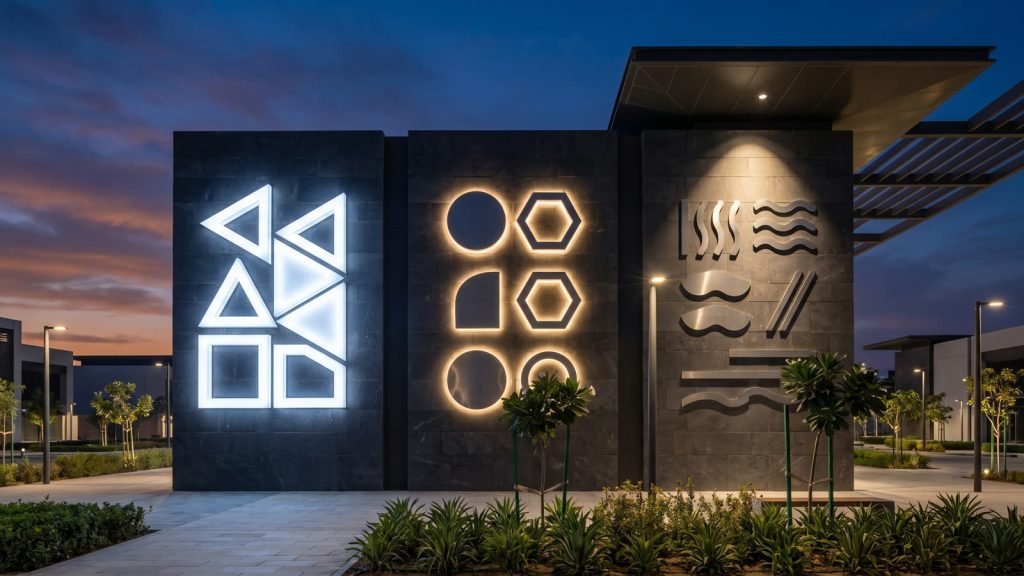
Signage materials that survive UAE heat, sun and salt
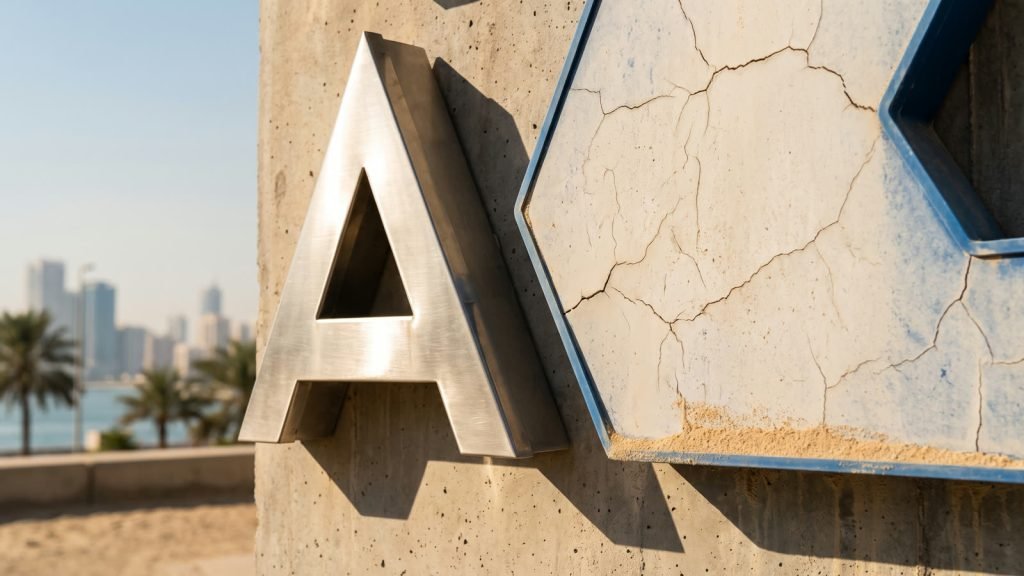
A sign that looks sharp on installation day can look tired within a couple of summers. In the UAE the causes are predictable: intense heat, very strong ultraviolet light, fine sand, and near the coast, humidity and salt in the air. Most early failures come down to a material or component that was fine for a mild climate and wrong for this one.
Acrylic: ask for UV-stabilised, cast sheet
Acrylic is used for letter faces, light box panels and many decorative signs. Not all acrylic behaves the same outdoors. Cast acrylic with UV stabilisers holds its colour and clarity far longer than cheaper extruded sheet, which can yellow, turn brittle or develop fine cracks after long sun exposure.
Colour matters too. Dark faces absorb more heat, and in direct summer sun that can shorten the life of both the acrylic and the LEDs behind it. If a dark colour is essential, good ventilation inside the letter helps.
Stainless steel: 304 or 316
Stainless steel letters and fascias look premium and last for decades, but the grade matters. Grade 304 is fine for most inland and indoor use. Grade 316 contains molybdenum, which gives it much better resistance to chlorides, the salt carried in coastal air. For buildings near the sea, 316 is worth the extra cost. Otherwise, brown tea staining can appear on the surface.
Finish is a practical choice as well as a visual one. Mirror finish shows every fingerprint and scratch; brushed finish hides them much better at eye level.
Aluminium and composite panel
Aluminium is light, does not rust and takes a durable powder coat, which makes it a good choice for large letter returns, sign trays and frames. For fascias and cladding, aluminium composite panel (ACP) is common. On buildings, the core of the panel is a safety matter: UAE fire safety rules require fire-rated panels for cladding. Ask for the fire-rating certificate of the panel being used, not just the brand name.
Vinyl: cast for long life, laminated for sun
Printed and cut vinyl covers everything from window graphics to wall murals and vehicle wraps. Cast vinyl is more stable and lasts longer outdoors than calendered vinyl, which can shrink and lift at the edges in heat. For printed graphics in direct sun, a UV laminate over the print slows fading significantly.
LEDs and power supplies
Outdoor electronics need a proper ingress protection rating. IP65 or better means the unit is sealed against dust and water jets, which covers sand storms and cleaning. Heat is the other enemy. LED drivers run hot, and a driver sealed inside a closed metal box in August will fail far sooner than one with airflow. Good signs place drivers where they are ventilated and can be replaced without removing the sign.
The small parts that cause stains
Fixings are easy to overlook. Ordinary steel screws and brackets rust, and the rust runs down the wall below the sign as orange streaks. Stainless steel fixings avoid this entirely for a very small difference in cost.
A short specification checklist
- UV-stabilised cast acrylic for faces and panels.
- Grade 316 stainless steel for coastal locations.
- Powder-coated aluminium for trays and returns.
- Fire-rated composite panel for building cladding, with certificate.
- Cast vinyl with UV laminate for printed outdoor graphics.
- IP65 or better for outdoor LEDs, with ventilated, accessible drivers.
- Stainless steel fixings throughout.
None of these choices is exotic. They are simply the difference between a sign specified for the climate it will live in and one that was not.